New Institutional Report Released
Access our strategic market perspective on necessity-based real estate and private credit fundamentals.
Read Full Report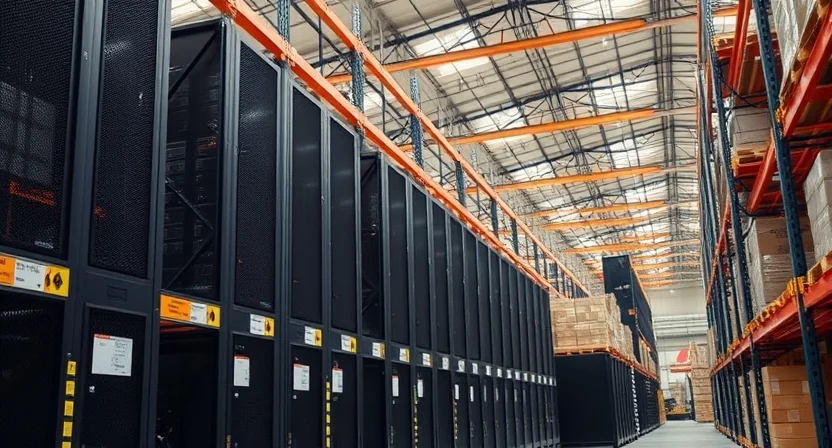
For most of the past two years, investors were told to wait for cheaper money. On September 16, the Federal Reserve went the other way. The Federal Open Market Committee voted 12–0 to raise its benchmark rate by a quarter point, to a range of 3.75%–4.00%, saying the move would "support a timelier return" to its 2% inflation goal.
The hike did not come out of nowhere. In July, three committee members had already dissented in favor of raising rates. At Jackson Hole in August, Chairman Kevin Warsh noted that PCE inflation was running at 3.7% over the past year and said, "The responsibility for 65 months of sustained, elevated inflation sits squarely with the central bank." By September, the vote was unanimous.
The message for anyone allocating capital is simple: the cost of money is set by today's inflation, not by last year's forecasts. Here is what is driving the shift, where the money is moving, and why the AI build-out sits at the center of it all.
The Middle East conflict that began this spring changed the outlook. In April, the IMF titled its flagship report Global Economy in the Shadow of War, forecasting global growth of 3.1% in 2026 and 3.2% in 2027, both below the pre-pandemic average. The Fund warned that the slowdown and the rise in inflation would hit emerging and developing economies hardest.
Energy is where the conflict shows up most clearly. The U.S. Energy Information Administration (EIA) estimates global oil inventories have fallen by about 400 million barrels this year and expects Brent crude to average around $90 a barrel in 2026 before easing toward $74 in 2027. The Fed's latest Beige Book reports "widespread" price increases for energy, transportation, metals and petrochemicals across the country.
Yet the U.S. economy is holding up. Unemployment sits at 4.1%, consumer spending has grown more than 2% over the past year, and, in Warsh's words, "business capital expenditures… are rising rapidly," with investment in equipment and intangibles growing about 9%, the fastest pace since 2021. Much of that spending has one destination: artificial intelligence.
The AI boom is global in ambition, but its physical footprint (data centers, chips, power plants and transmission lines) is showing up most visibly in the United States.
Scale. Fed Governor Lisa Cook noted in May that companies have announced "more than $1.5 trillion in data-center plans, only a small portion of which have been realized."
Construction. Census Bureau data show spending in the office category, which includes data centers, up 21.3% year over year to a $123 billion annual rate. That is the fastest-growing major category of private construction, and it is rising while total construction is down 3.8%.
Power. The EIA reports record U.S. electricity demand driven by data center expansion. Private power construction is up 6.5% to $161.5 billion, and Texas's ERCOT grid has been running near record demand.
Industry. The Beige Book cites data-center-related orders as a key source of manufacturing demand, with Cleveland reporting "robust" demand tied to data centers and defense.
Asia remains central to the supply chain and to the next phase of growth, which the IMF highlighted in its September piece Asia's Next Growth Story. But the capital spending, and the real estate, energy and construction activity that come with it, are landing heavily on American soil.
Productivity is climbing. Labor productivity growth has run above its pre-pandemic average, and Governor Cook expects AI to "further boost productivity growth." Research cited by Governor Michael Barr found AI cut the time to complete tasks by 40% and improved quality by 18%.
It is keeping the economy growing. Business investment has helped offset the drag from high energy prices and weak housing.
It creates real-asset demand. Data centers need land, power, water, fiber, industrial suppliers and skilled labor. Regions that can deliver those, Texas among them, are capturing jobs and investment.
Growth has beaten expectations. Warsh observed that AI progress "has been faster even than its evangelists predicted a couple of years ago."
It is inflationary in the near term. Cook notes electricity prices have been rising about 5% a year, with similar increases in water prices, and wages in specialty construction trades have climbed. Competition for power, labor and materials is one reason rates are going up, not down.
Valuations are concentrated. The IMF's April Global Financial Stability Report flags "stretched valuations and concentration — particularly in artificial intelligence related firms." In the Fed's May Financial Stability Report, AI-related risks were among the most-cited threats in its survey of market contacts.
More of it is funded with debt. Hyperscalers are issuing large bond deals, and smaller developers are turning to private credit and asset-backed financing. Cook called leveraged financing of an emerging technology a risk, though leverage remains below pre-2008 levels.
Execution risk. Most of the $1.5 trillion in announced plans has not been built. If demand or financing falls short, some projects will not be completed.
The labor and fairness question. Barr reports "little evidence of economy-wide job displacement" so far, but "some evidence that AI may have made job entry harder for young workers," and warns AI may "reinforce concentration of market power."
Moving in:
Data centers and digital infrastructure. The strongest construction category in the country, funded by investment-grade bonds, private debt and asset-backed credit. Demand for sites with power access is intense.
Power generation, grid and utilities. Private power construction at $161.5 billion and rising electricity prices make generation, transmission and energy-efficient buildings a direct way to invest in AI without taking technology risk.
U.S. energy and LNG. American crude output is on track for a record 13.8 million barrels a day in 2026, natural gas production for a record 122.5 billion cubic feet a day, and LNG exports jumped 23% in the first half of the year. Cheniere's Corpus Christi Stage 3 expansion was just completed, making it the second-largest LNG facility in the country. The Dallas Fed reports oilfield activity "picked up."
Industrial and logistics real estate. The Dallas Fed Beige Book reports particular strength in industrial leasing across Texas, supported by manufacturing tied to defense and data centers.
Private credit, selectively. Lending is expanding. The Dallas district saw loan growth accelerate across all categories with improving credit performance for the first time since 2022. But the IMF and Fed both warn about stress among floating-rate borrowers, so underwriting quality matters more than ever.
Moving out or on hold:
New factory construction. After the reshoring surge of recent years, manufacturing construction is down 21.7% year over year. Factories are running busier, but fewer new ones are breaking ground.
For-sale housing and new residential. Single-family construction is down 6.5%, and the Dallas Fed describes builders offering heavy incentives against "weak demand." Apartments are absorbing units but with "elevated concessions" and flat-to-declining rents.
Hotels and new retail development. Lodging construction is down 9.9% and commercial construction 4.7%. For owners of existing, well-located retail, limited new supply is a tailwind.
Long-duration bets on falling rates. With the Fed hiking, strategies that need cheaper refinancing to work are losing favor to assets that pay income today.
A world with higher rates, expensive energy and an AI-driven investment boom is not one to sit out. It is one that rewards discipline, which is how we have always invested. Our rule is simple: downside first. We underwrite what can go wrong before we price what can go right. We review roughly 200 opportunities a year, test each one against more than 30 data points, and invest in three to five. Our principals invest alongside our partners in every deal, on the same terms.
Here is how that discipline applies to today's economy, across each of our strategies.
The Fed's hike confirms what our underwriting already assumed: the next move in rates may not be down. We underwrite every property at today's financing costs and conservative leverage, and we avoid deals that only work if cap rates compress or refinancing gets cheaper. Commercial property prices have "further stabilized following significant declines," according to the Fed, but refinancing needs remain a vulnerability. That favors owners who bought on income, not hope.
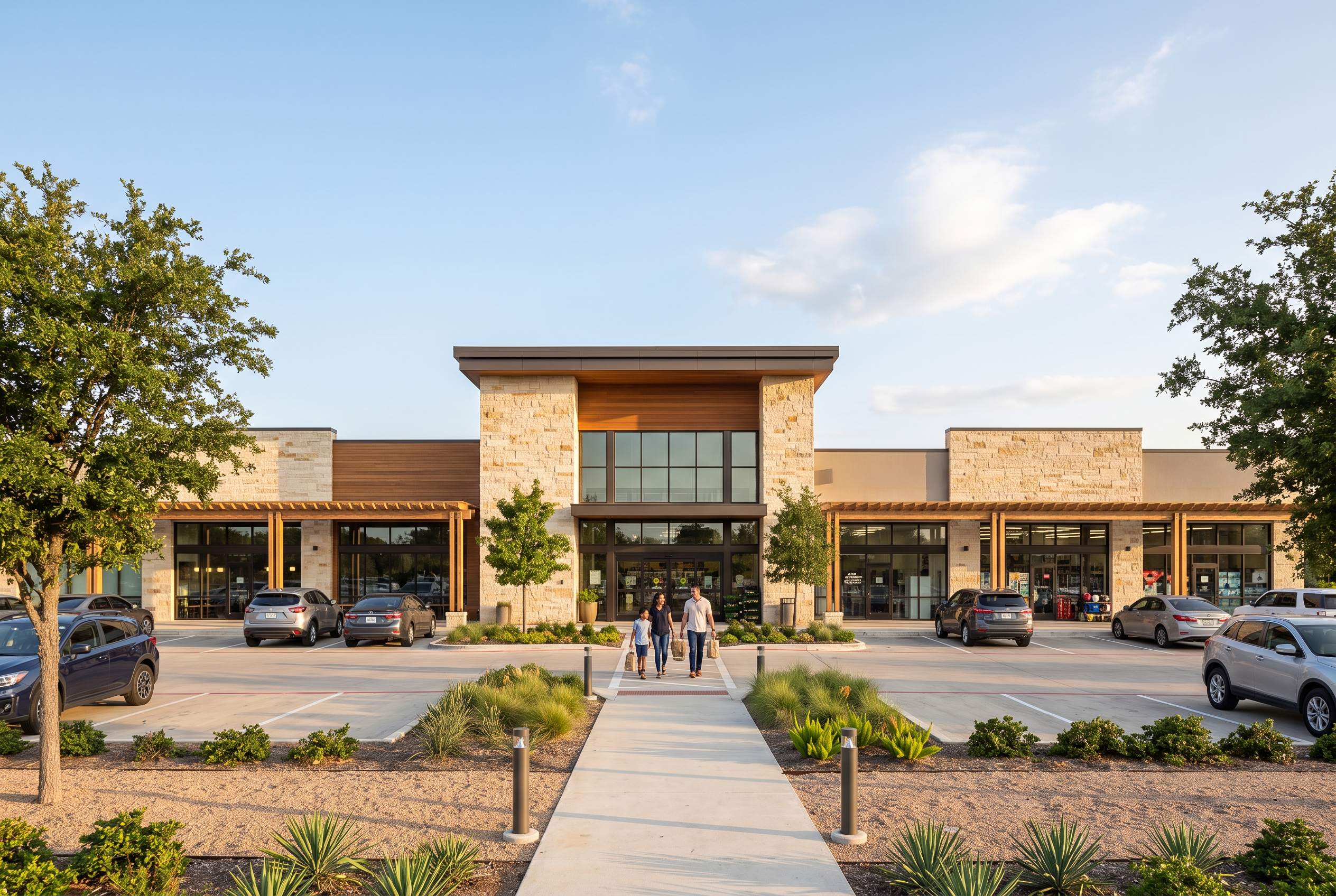
Necessity retail (our core). We focus on grocery-anchored, daily-needs and service-oriented centers in Houston, San Antonio and the Rio Grande Valley. We buy at 75% occupancy or better, with a specific, costed plan for the remaining space, and favor NNN leases of five to 15 years with CPI or fixed rent increases. Those escalators matter when inflation is running at 3.7%. New retail construction is down 4.7% nationally, which limits new competition for existing centers. The Dallas Fed reports Texas retail sales still rising as consumers hold up despite higher gas prices.
Medical outpatient. Healthcare construction is down 5.3% year over year while demand for outpatient care keeps growing. We target 10- to 15-year leases with health systems and specialist groups: long, predictable income from tenants whose demand does not depend on the economic cycle.
Multifamily, kept deliberately small. Single-family construction is down 6.5%, and Texas builders are offering heavy incentives against weak buyer demand. When buying a home gets harder, renting gets more durable. We focus on well-located Class B properties in supply-constrained submarkets, where annual lease resets offer a hedge against inflation. With apartment concessions still elevated across Texas metros, we underwrite flat rents and avoid ground-up development.
The AI build-out needs more than chips. It needs electricians, HVAC contractors, industrial service firms, distributors and specialty manufacturers, and those are the businesses we buy. The Fed's Beige Book reports that skilled trades and technical workers remain "difficult to find," and Governor Cook notes wages in specialty construction trades have risen noticeably. That is a demand signal for exactly the kind of established companies we target.
We look for profitable, "boring-in-the-best-way" American businesses in home and commercial services, healthcare and behavioral health, distribution, industrial services and niche light manufacturing, primarily in Texas, Florida and the Southeast. We want a decade or more of consistent, verifiable earnings across a full cycle and a management team already in place. We keep the team, keep the name and hold for the long term. No turnarounds, no roll-ups, no resale clock.
In this cycle, we give extra weight to two factors: pricing power, so rising wages and input costs can be passed through, and contracted or recurring revenue. We also ask whether AI makes a business more productive or makes it obsolete. We want the former.
Higher rates are a headwind for borrowers but a tailwind for disciplined lenders. With the Fed raising rates and banks tightening standards slightly, direct lenders can take senior secured positions with wide equity cushions below them. In the Dallas district, loan demand is growing across all categories and credit performance is improving for the first time since 2022.
The IMF and the Fed are both watching private credit closely, pointing to stress among floating-rate borrowers and to growing retail exposure in semiliquid vehicles. Our approach reflects that: senior positions, real collateral we understand, conservative loan-to-value, and borrowers whose cash flow can carry the debt at today's rates, not tomorrow's.
Across real estate, private equity and credit, the same questions drive every decision. Does the investment produce income now? Does it hold up if rates stay high or energy stays expensive? Is it tied to demand we can see on the ground, such as Texas's energy output, power needs and population growth, rather than a forecast? And does it let us benefit from the AI build-out without paying for AI valuations?
The global economy is not stalling. It is repricing. For capital that measures in years, not quarters, repricing is often where the best opportunities are found.
Sources
Federal Reserve, FOMC Statement, September 16, 2026 — https://www.federalreserve.gov/newsevents/pressreleases/monetary20260916a.htm
Federal Reserve, FOMC Statement, July 29, 2026 — https://www.federalreserve.gov/newsevents/pressreleases/monetary20260729a.htm
Chairman Kevin Warsh, "In Our Time," Jackson Hole, August 28, 2026 — https://www.federalreserve.gov/newsevents/speech/warsh20260828a.htm
Governor Lisa D. Cook, "The Opportunities and Risks AI Presents for the Economy and Financial System," May 27, 2026 — https://www.federalreserve.gov/newsevents/speech/cook20260527a.htm
Governor Michael S. Barr, "Will Artificial Intelligence Broadly Raise Living Standards or Drive Income and Wealth Inequality?" July 14, 2026 — https://www.federalreserve.gov/newsevents/speech/barr20260714a.htm
Federal Reserve, Beige Book (National Summary), September 2, 2026 — https://www.federalreserve.gov/monetarypolicy/beigebook202608-summary.htm
Federal Reserve, Beige Book (Dallas District), September 2, 2026 — https://www.federalreserve.gov/monetarypolicy/beigebook202608-dallas.htm
Federal Reserve, Financial Stability Report, May 2026 — https://www.federalreserve.gov/publications/2026-may-financial-stability-report-overview.htm
International Monetary Fund, World Economic Outlook, April 2026: Global Economy in the Shadow of War — https://www.imf.org/en/Publications/WEO/Issues/2026/04/14/world-economic-outlook-april-2026
International Monetary Fund, Global Financial Stability Report, April 2026 — https://www.imf.org/en/Publications/GFSR/Issues/2026/04/14/global-financial-stability-report-april-2026
IMF Blog, "Asia's Next Growth Story," September 2, 2026 — https://www.imf.org/en/Blogs
U.S. Energy Information Administration, Short-Term Energy Outlook, September 9, 2026 — https://www.eia.gov/outlooks/steo/
U.S. Energy Information Administration, Today in Energy (U.S. crude production, LNG exports, Corpus Christi Stage 3, ERCOT demand), August–September 2026 — https://www.eia.gov/todayinenergy/
U.S. Census Bureau, Construction Spending, July 2026 (released September 1, 2026) — https://www.census.gov/construction/c30/current/index.html
This article is for informational purposes only and does not constitute investment advice or an offer to sell or solicit any security. Past performance is not indicative of future results.

OTIMA Research & Strategy produces institutional market commentary grounded in direct underwriting experience across U.S. commercial real estate sectors.